
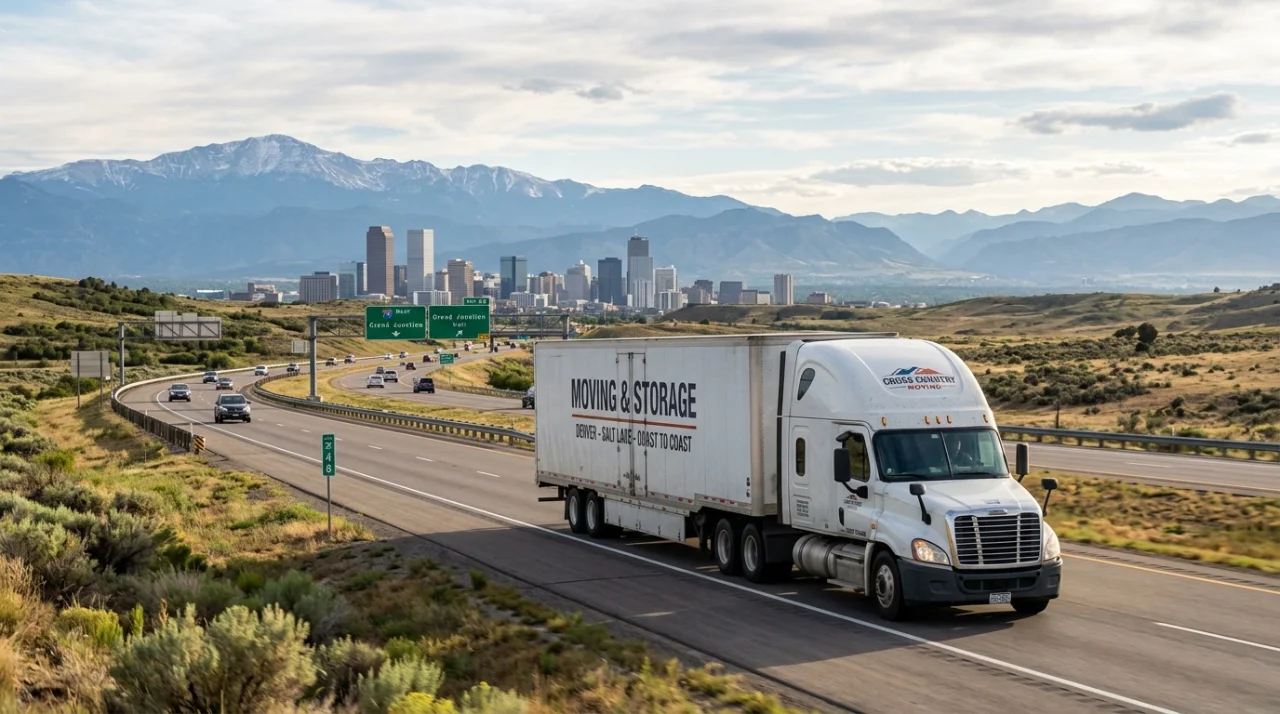
Exiting the Mile High City for new horizons should be an exciting transition, but the logistics of moving out of state can feel complicated.
These require more than a sense of adventure; you need to organize and prioritize important tasks to get things done as efficiently as possible.
No matter where you are heading, a successful long-distance relocation project depends on preparing early and strategic planning.
To help you navigate this journey, we have compiled the ultimate guide to the essential tasks required for a seamless transition.
1. Create a Master Moving Checklist for Essential Tasks
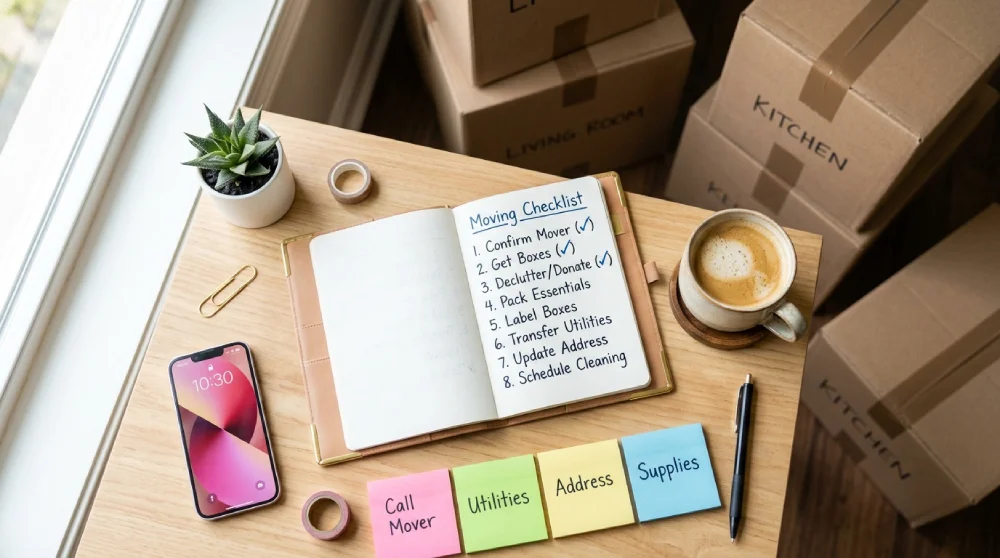
The foundation of keeping your move stress-free starts with creating a master checklist.
This checklist should guide your planning and serve as a central tracking tool throughout the moving process.
That typically starts with developing your own moving checklist to track your progress and to ensure that all important steps in your move are completed.
This will be the brain and outline of your entire interstate move.
The easiest way to do this is to break things down into more manageable sections and set a timeline for completing them.
You can then track your progress month by month, ensuring nothing falls through the cracks.
This will become your own, ultimate checklist when moving to a new home.
2. Research and Vet Moving Companies
People across the Front Range are heading to new places, and hiring movers is an integral part of relocating out of state.
Not every mover is built for your needs or budget.
Choosing the best out-of-state movers in Denver ensures your belongings are handled by pros who understand the nuances of interstate transit.
Be sure to pay attention to the following before that moving truck arrives:
- Make sure the company has a valid USDOT number and MC number. These are easy to verify on the FMSCA website.
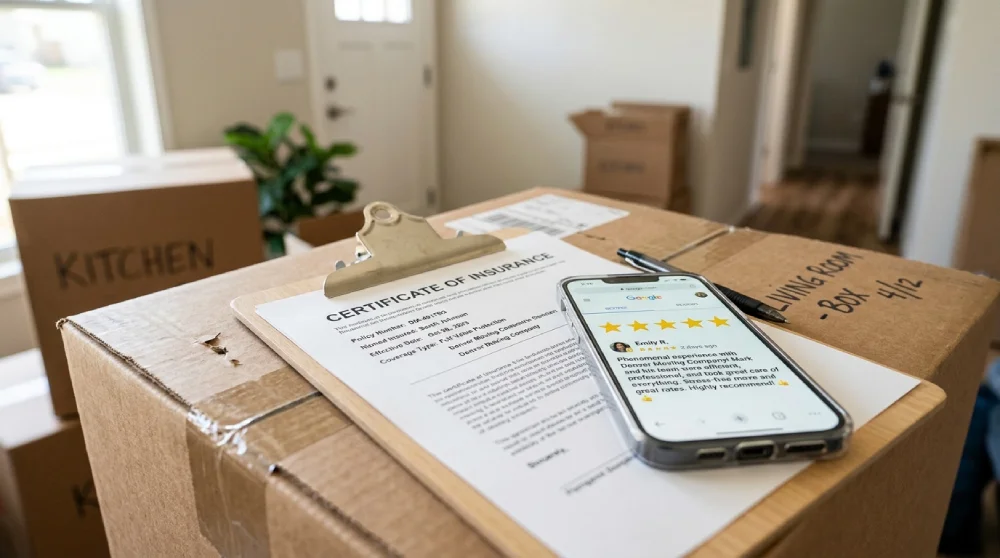
- Check out their customer reviews to see what others have experienced while moving out of state.
- Verify the movers have public liability and cargo insurance coverage. You can even ask for a formal certificate of insurance if needed for an HOA or property management company.
Request Quotes for a Cross-Country Move
Hiring reputable movers is essential to ensuring a smoother transition during relocation.
To gain an accurate estimate, you will want to review your options with different moving companies.
Any reputable company will offer an in-home or video survey to ensure they provide the most accurate estimate possible.
Once you have requested quotes from a few different companies, you can more effectively evaluate which is the best fit.
3. Budgeting for an Interstate Move

Relocating requires early planning, including setting a budget, decluttering, and researching the new area’s cost of living and neighborhoods.
Creating a solid moving budget helps you set aside what you need and plan for unexpected expenses.
The costs associated with any interstate move can vary depending on how much you need to haul and where you are heading.
You will need to account for everything, which often includes the following:
- Fuel costs.
- Lodging while in transit.
- Storage unit fees.
- General travel costs.
- First month’s rent and security deposit.
- Utility deposits and wi-fi connection fees.
Set Aside an Emergency Fund
Unfortunately, there are always things that careful planning cannot account for.
It is vital to account for the hidden costs of moving.
You may experience a vehicle breakdown, need to find a place to stay for an extra few days, or even end up with additional packing fees.
The following chart provides a full breakdown of how to plan for emergency funding:
4. Declutter Everything As Early As Possible

The amount of stuff you have can really impact the cost of your move and the complexity of moving across state lines.
Decluttering things allows you to better plan ahead and offers more organization throughout the process.
Shipping items you no longer need is a waste of resources.
The easiest way to reduce your moving expenses is to downsize.
Sell, donate, or recycle heavy items before requesting your final estimate from a long-distance moving company in Denver.
Donations & Consignment
Whether you are hiring movers or using a moving container, reviewing all your inventory will help minimize costs.
Donating used items to local charities helps you plan effectively and gives back to the community.
Consignment is another option for higher-value items, which can help you stretch your moving budget.
5. Set Up Utilities at Your New Location

To ensure everything is set up at your new mailing address, all utilities should be established a few weeks in advance.
Coordinating with electric utility companies, water, gas, and internet providers beforehand frees up more time upon arrival.
No one wants to arrive at a dark house on moving day or end up stuck waiting around for an internet technician while moving in boxes.
6. Gather and Secure Important Documents

Heading to a new address in a different state has a whole lot of moving pieces, and keeping your sensitive information with you is part of that.
With all moving services, you may experience delays due to weather and other logistical issues, leaving you without your most essential documents.
Gathering and organizing those in advance is an essential step, and it is easy to integrate into the process when you start packing.
During the chaos of packing, your important documents should never go into a moving truck.
Keep the following in a dedicated, hand-carried folder:
- Birth certificates and social security cards.
- Medical records.
- Housing and lease agreements.
- Financial records and tax documents.
- Pet records.
Scan and digitally back up all documents prior to your move.
7. Prepare Your Vehicle for the Cross-Country Move
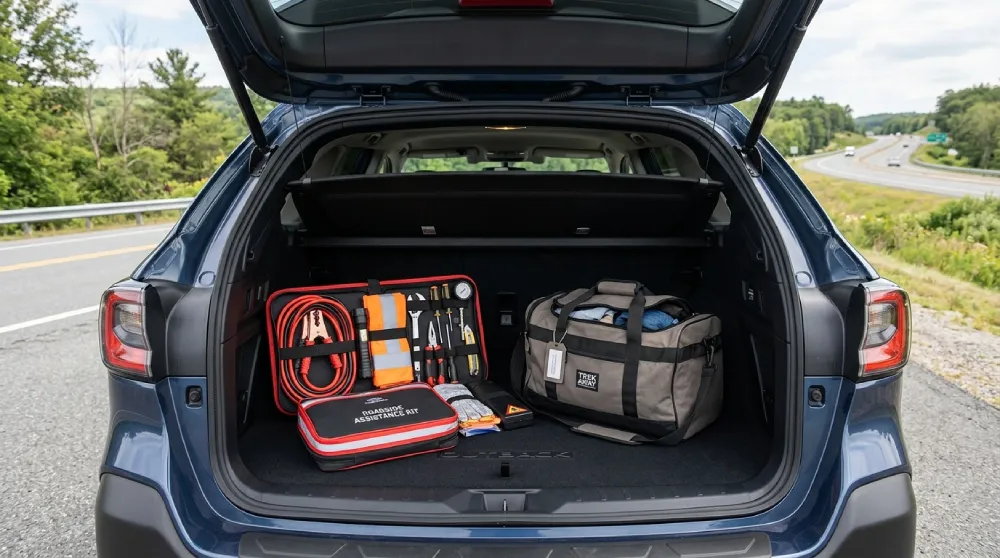
Even if you hire expert movers for a cross-country move, you still need to prepare your personal vehicle for the trip.
If you plan to use your own car for the trip, have it inspected thoroughly before heading to your final destination.
This may mean taking the car in for an oil change, examining tire tread and brake wear, checking all essential fluids, and checking battery power.
You may also consider stocking your truck with jumper cables and emergency tools or a roadside kit, just in case the unexpected arises.
Plan for a Cross-Country Vehicle Shipment
If you are opting to ship your own vehicle rather than drive, you will need to choose between open or enclosed transport.
Most household moving services do not offer car transport, so you will need to refer to a different company for that.
You will want to book your vehicle carrier a few weeks in advance to line up the pickup window accordingly.
8. Notify Government Agencies and Update Your Driver’s License
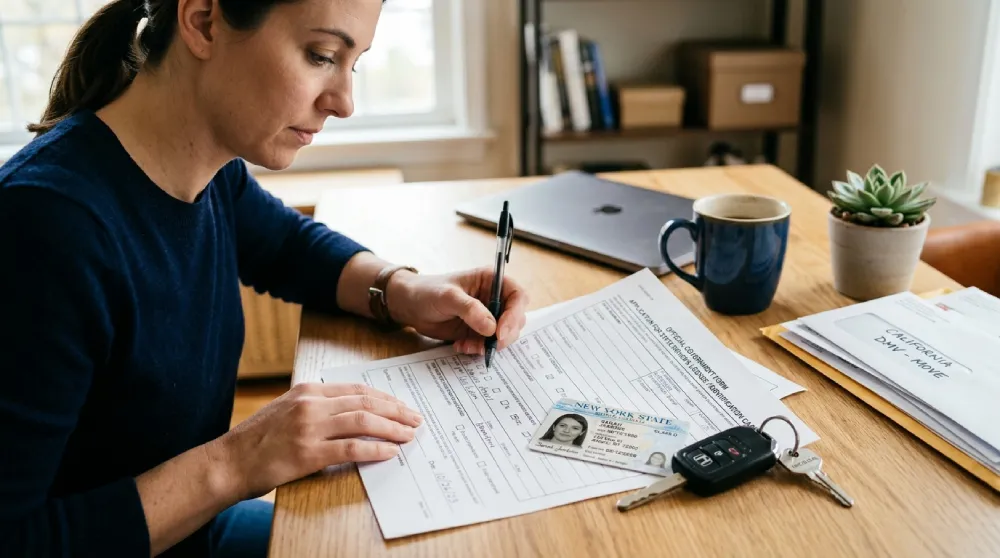
While it may be easy to overlook, updating all your official records is one of the final steps when moving out of state.
Generally, states will want your driver’s license within the first 30 to 90 days after establishing residency.
This includes things like new license plates, requesting your new driver’s license, completing emissions testing, etc.
If you miss the window to complete these tasks, you may incur fines, late fees, and complications.
Here is a great checklist of all of the agencies you should notify:
Transferring School Transcripts & Changing Doctors
Your family’s health and education are yet another part of the journey with a long-distance move.
You will want to request all medical records from your current doctors and school districts before leaving.
Having these physical copies is extremely important as you transfer to new pediatricians and school environments.
This is particularly true if your child is on an IEP or 504 plans, as these will be needed by the new school district immediately upon enrollment.
9. Professional Packing for Long Distance to Avoid Heavy Lifting

Many will opt to pack their own items to avoid additional moving-related expenses, although professional packing can help save you time and any additional stress.
Interstate moves entail substantial change, shifting, and complications that can compromise the integrity of DIY packing.
When you delegate these tasks to experts, you eliminate the risk of burnout and better protect your belongings.
Utilizing professional packing services to save time and stress ensures that fragile items are crated and secured for the long haul.
DIY Packing Versus Full Service Movers & Packers
Professional packers use professional packing supplies and specialized equipment to make moving out of state much easier than DIY methods.
- Box Integrity: Professionals use heavy-duty, double-walled boxes for fragile items and specific “dish packs” for kitchenware. This prevents the bottom of a box from giving out during a heavy lift.
- Space Management: They are experts at eliminating “dead air” inside boxes. When you are charged by the cubic foot or weight, tightly packed boxes prevent items from shifting and breaking during sharp turns or sudden stops on the highway.
- Specialty Item Crating: For high-value items such as large mirrors, artwork, or delicate electronics, pros can provide custom wooden crating that a standard cardboard box cannot match.
10. Research the New Area
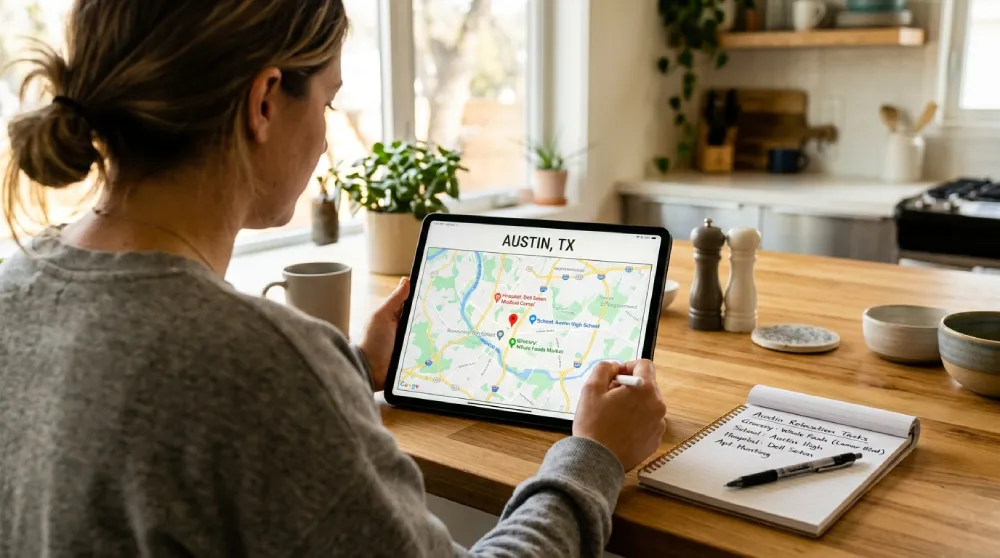
While you have likely already done some research in the process of finding a new place, take a deeper look into a place that is unfamiliar.
From mapping out the nearest grocery store to finding a new restaurant, get to know the new neighborhood.
Consider joining local forums on Nextdoor to be in the know of the happenings in the area.
Research local emergency services and healthcare providers in your new area.
Review the school ratings and any local amenities near your new house.
Getting to Know Your New Community
The more you know before you go, the easier it is to plan your first outing.
Once you arrive, you can’t get to know your community without getting outside.
If you take the time to research good places to eat and fun things to do beforehand, you can spend your first weekend out exploring.
Survey local businesses and community events to integrate into your new neighborhood.
This can help you settle in, get to know your neighbors, and make the transition more seamless.
Key Factors & Tips for a 2026 Out-of-State Move
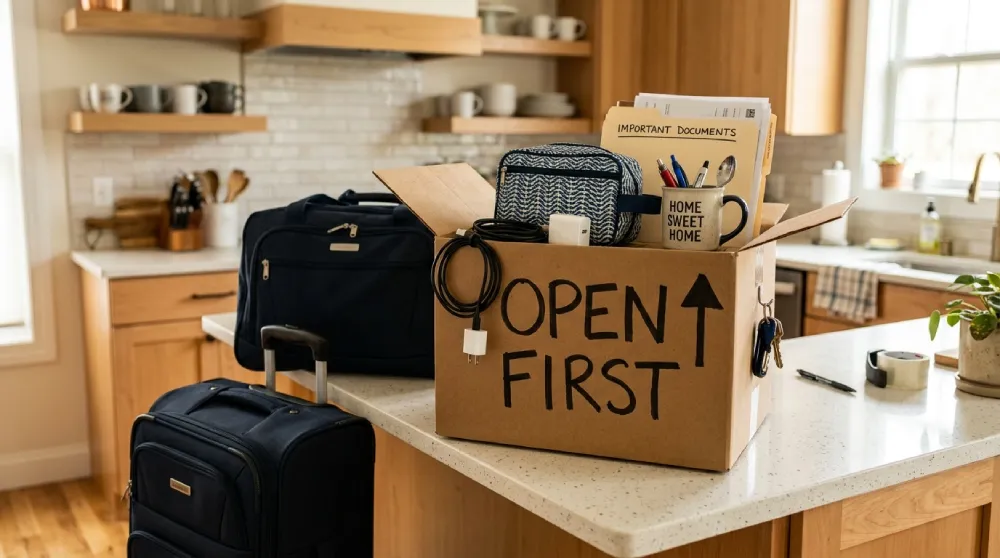
Now that you have a better idea of how to make a smooth transition to a new city, don’t forget about these additional tips.
The “Open First” Box
Keep a separate travel bag with day-to-day essentials during the move.
Set aside a box or a luggage set to place all your immediate essentials.
These can be documents, phone chargers, and toiletries.
Setting something like this aside can make the first week a lot more comfortable and help you avoid constantly buying new things.
Digital Inventory
Use your phone and take photos of your items so you know where everything goes.
You may also consider taking a video of your household before things are loaded onto the moving truck, so you have proof of their condition in case of damage.
Supply Strategy
High-quality packing supplies are non-negotiable for long-hauls; cheap boxes often collapse under the weight of stacked items in a trailer.
Gather your moving supplies in advance to avoid a last-minute struggle.
Prohibited Items
Be aware of what you should not pack for your move.
There are plenty of items that cannot be loaded, such as flammables, perishable food, and household plants, which may be restricted by state agriculture border checks.
Frequently Asked Questions About the Moving Process
Your Partner in Professional Relocation for Simple Out of State Moves

Successfully navigating an interstate move comes with a lot of ups and downs.
It can feel like a massive puzzle moving out of state, but in prioritizing a checklist and reaching out for support, you can get things done.
The key to a more effortless relocation process lies in proper preparation and choosing the right professional movers.
At The Denver Moving Company, we take pride in offering so much more than just a moving service across state lines.
We are a family-owned and locally operated team dedicated to providing total peace of mind.
Start the adventure off right with a free moving quote and begin your out-of-state journey today.